Moraine Lake
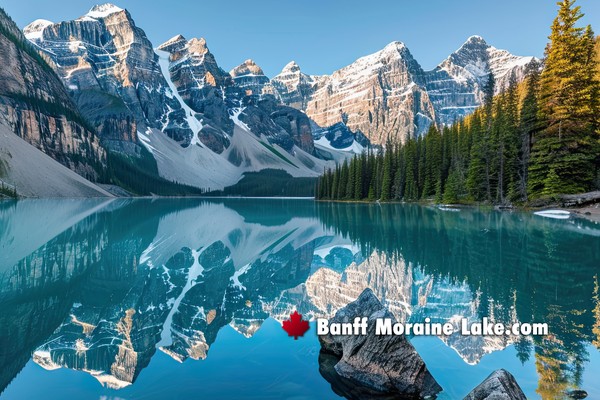
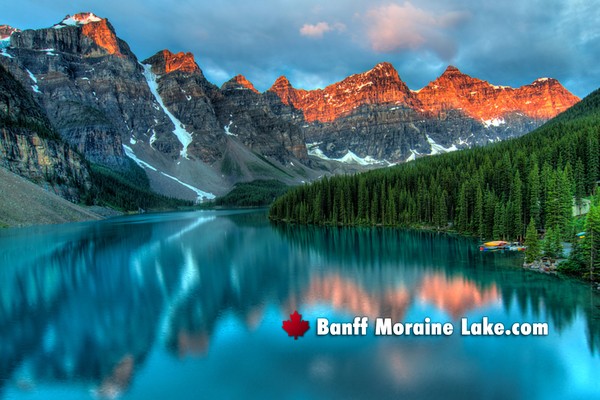
Moraine Lake is one of the most visually striking alpine lakes in the Canadian Rockies, located in the Valley of the Ten Peaks within Banff National Park. Set at an elevation of roughly 1,885 metres (6,183 feet), the lake sits in a natural basin surrounded by towering, sharply defined mountain summits that rise dramatically from the water's edge. The surrounding peaks form a rugged amphitheatre of stone and snow that frames the lake and creates one of the most iconic landscapes in Canada. Dense forests of lodgepole pine and subalpine fir blanket the lower slopes, while glacial scree and exposed rock dominate the higher elevations. Moraine Lake is one of the most photographed locations in Canada.
The lake is renowned for its intense turquoise colour, which becomes most vivid during mid-summer. This colour is created by rock flour-extremely fine particles of silt produced by glaciers grinding against bedrock high in the surrounding mountains. As glacial meltwater carries this sediment into the lake, sunlight reflects off the suspended particles and produces the luminous blue-green hue that Moraine Lake is famous for. The colour can shift subtly throughout the season and even throughout the day depending on light, weather, and the amount of glacial runoff entering the basin.
Moraine Lake itself is relatively small but remarkably deep, stretching about 500 metres across at its widest point and reaching depths of around 50 metres. The shoreline alternates between rocky edges, quiet forested sections, and the well-known rockpile at the lake's northeastern end. This rockpile, formed by an ancient landslide, provides an elevated vantage point overlooking the water and the Valley of the Ten Peaks beyond. From this natural viewpoint, the entire lake spreads out below with the massive peaks rising behind it, creating a perspective that has made the location one of the most photographed landscapes in the Rockies.
Seasonally, Moraine Lake undergoes dramatic transformations. The lake is frozen and buried under snow through much of the winter and early spring, and access to the valley is typically closed due to avalanche risk along the narrow mountain road. As temperatures warm in late spring and early summer, snowmelt feeds the surrounding creeks and glaciers begin releasing meltwater that gradually fills the lake basin. By mid to late June the water level rises rapidly, and the famous turquoise colour emerges as glacial sediment increases.
During summer, Moraine Lake becomes a gateway to some of the most scenic alpine hiking terrain in Banff National Park. Trails lead into Larch Valley, Sentinel Pass, and along the lakeshore, allowing visitors to explore the surrounding subalpine forests and high alpine meadows. In early autumn, the area becomes especially striking when the alpine larch trees turn brilliant gold before shedding their needles for winter. This brief seasonal display draws hikers and photographers who come to see the contrast of golden trees against the dark peaks and blue water.
Wildlife is an integral part of the Moraine Lake ecosystem. The surrounding forests and meadows provide habitat for species such as mule deer, hoary marmots, pikas, and occasionally black bears or grizzly bears moving through the valley. Birdlife is also common, including Clark's nutcrackers and gray jays that thrive in the alpine environment. Because of the intact wilderness surrounding the lake, visitors often experience a strong sense of immersion in the natural mountain landscape.
Despite its remote alpine setting, Moraine Lake has become one of the most recognized and celebrated landscapes in the Canadian Rockies. The combination of glacier-fed water, dramatic mountain architecture, and seasonal alpine ecosystems creates a setting that captures the essence of the Rocky Mountains. Whether viewed from the rockpile at sunrise, experienced quietly along the shoreline, or explored through the surrounding hiking trails, Moraine Lake remains one of the most memorable and visually powerful natural locations in Banff National Park.
Moraine Lake Lodge
Moraine Lake Lodge is an intimate wilderness lodge located directly on the shoreline of Moraine Lake in the Valley of the Ten Peaks in Banff National Park. Set among alpine forest with unobstructed views of the lake and surrounding mountains, the lodge offers one of the most exclusive overnight experiences in the Canadian Rockies. Its location allows guests to experience Moraine Lake during the quietest parts of the day-early morning and evening-when most day visitors have left the area.
The lodge was originally built in the early 1960s and has evolved into a boutique mountain retreat while maintaining a rustic alpine character. The property consists of a central lodge building and a collection of private cedar cabins nestled among the trees near the lakeshore. Architecture and design emphasize natural materials such as wood, stone, and large windows that frame views of Moraine Lake and the surrounding peaks. The setting feels secluded and tranquil, with the sounds of wind through the trees and glacial water flowing through nearby creeks.
Accommodations at Moraine Lake Lodge are designed to reflect a classic Rocky Mountain cabin experience. Rooms feature handcrafted log furniture, stone fireplaces in many units, and private balconies or patios that overlook either the forest or the lake. There are no televisions in the rooms, which encourages guests to immerse themselves in the natural surroundings. Evenings often revolve around quiet time by the fireplace, stargazing along the lakeshore, or listening to the stillness of the alpine valley.
Dining is a central part of the lodge experience. The main dining room overlooks Moraine Lake through large panoramic windows, allowing guests to enjoy views of the water and the Ten Peaks while eating. The menu emphasizes Canadian cuisine with seasonal ingredients, and the atmosphere is refined but relaxed. A smaller café near the lakeshore offers lighter fare and beverages during the day.
Because the lodge sits directly beside the lake, guests have immediate access to many of the area's signature experiences. Canoes are available on the lake, allowing visitors to paddle across the turquoise water beneath the towering peaks. Hiking trails begin nearby, including routes to Larch Valley, Sentinel Pass, and lakeshore walks that reveal different perspectives of Moraine Lake. Early morning photography from the famous rockpile viewpoint is particularly special for overnight guests who can access it before crowds arrive.
The atmosphere at Moraine Lake Lodge is defined by its sense of remoteness and connection to the surrounding landscape. With limited guest capacity and a setting surrounded by towering mountains, the lodge provides a quiet alpine retreat that allows visitors to fully experience Moraine Lake beyond a brief daytime visit. For many travelers to Banff National Park, staying overnight at the lodge offers a rare opportunity to experience one of the most iconic locations in the Rockies in a slower, more immersive way.
Wildlife at Moraine Lake
Wildlife is an important part of the natural experience around Moraine Lake, located in the rugged alpine landscape of the Valley of the Ten Peaks. The surrounding forests, rocky slopes, and alpine meadows provide habitat for a wide range of animals that visitors may encounter while exploring the lakeshore or nearby hiking trails.
One of the most commonly seen animals near the lake is the Hoary Marmot. These large, shaggy ground squirrels often lounge on the warm rocks along the Rockpile Trail, where they whistle loudly to warn their colony of potential danger. Smaller Golden-mantled Ground Squirrel are also frequently seen darting between rocks and forest edges near the lakeshore. Though curious and approachable, they should never be fed, as human food can harm wildlife and alter natural behavior.
Birdlife is also abundant around Moraine Lake. Visitors often notice the friendly Gray Jay, sometimes called the “whiskey jack,” which may perch nearby hoping for scraps. Clark's Nutcracker are another common sight, recognizable by their bold calls and gray-and-black coloring. These intelligent birds play a crucial ecological role by caching pine seeds that help regenerate high-elevation forests.
Larger mammals inhabit the surrounding wilderness as well. Black Bear and Grizzly Bear occasionally pass through the valley during the warmer months, particularly in spring and early summer when fresh vegetation is abundant. Because Moraine Lake lies within protected wilderness, sightings are possible, though typically at a distance. Other animals that roam the broader region include Moose, Mule Deer, and Mountain Goat, especially on higher alpine slopes.
Wildlife encounters at Moraine Lake are often subtle and respectful rather than dramatic. The quiet rustle of a squirrel in the trees, a marmot sunning itself on the rocks, or the sudden call of a nutcracker echoing across the valley are reminders that this landscape is still very much a functioning mountain ecosystem. Visitors who move slowly and keep a watchful eye often discover that the wildlife here adds another layer of wonder to the already spectacular alpine scenery.
Moraine Lake Access & Transportation
Can you drive to Moraine Lake?
You can no longer drive your personal vehicle to Moraine Lake. The Moraine Lake Road, which branches off the Trans-Canada Highway near Lake Louise, is closed to private vehicles. This restriction was introduced to manage heavy visitation, protect the fragile alpine environment, and improve safety along the narrow mountain road that leads into the Valley of the Ten Peaks.
Access to Moraine Lake is now managed primarily through shuttle and guided transportation services. The most common option is the Parks Canada shuttle system, which departs from the Lake Louise Park and Ride area located just outside the Lake Louise village. These shuttles run regularly during the summer and early fall seasons and take visitors directly to the Moraine Lake lakeshore. Reservations are typically required because demand is extremely high during peak travel months.
Several commercial tour companies and guided operators also provide transportation to Moraine Lake from nearby locations such as Banff and Lake Louise. These tours often include additional stops, guided interpretation, or combined visits with Lake Louise and other nearby scenic areas.
Guests staying at Moraine Lake Lodge are an exception to the driving restriction. Overnight lodge guests are permitted to drive to the property because they have confirmed reservations and limited vehicle access is allowed for the lodge.
Cycling is another option for reaching Moraine Lake. Outside of peak shuttle hours or early in the season before shuttles begin running, the Moraine Lake Road is popular with cyclists because of its scenic climb through forested mountain terrain. The road is about 12 kilometres long and steadily ascends toward the lake.
Because Moraine Lake has become one of the most visited locations in Banff National Park, planning transportation in advance is essential. Using the shuttle system is now the standard way most visitors reach the lake during the open season.
How do you get to Moraine Lake without a car?
There are several ways to reach Moraine Lake without a car, and most visitors now rely on organized transportation because private vehicles are not permitted on the Moraine Lake Road. Shuttle systems, transit connections, and guided tours provide convenient access from nearby communities such as Banff and Lake Louise.
The most common method is the Parks Canada shuttle service. This shuttle departs from the Lake Louise Park and Ride lot, located a short distance from the village of Lake Louise. Visitors reserve a departure time and board a bus that travels directly up Moraine Lake Road to the lakeshore. The shuttle system runs regularly throughout the summer and early fall seasons and is designed to handle the high demand for visits to Moraine Lake. Once at the lake, visitors typically have a scheduled return time but can also board later buses if space is available.
Travelers staying in Banff or Lake Louise can reach the Park and Ride without a car using regional transit. Public transit buses operate between Banff and the Lake Louise area, allowing visitors to connect to the shuttle system after arriving at the Park and Ride or the Lake Louise village area. This combination of transit and shuttle is one of the most efficient ways for car-free travelers to visit Moraine Lake.
Private tour companies also operate transportation services directly to Moraine Lake from Banff, Lake Louise, and occasionally Canmore. These tours often include early morning departures for sunrise viewing, guided interpretation of the surrounding mountains, and additional stops at nearby scenic locations. For many visitors, these guided services provide a simple door-to-door option.
Another popular option is cycling. The road to Moraine Lake is approximately 12 kilometres long and climbs gradually through forested terrain from the junction near Lake Louise. Many cyclists choose to ride early in the morning when traffic is minimal and the valley is quiet. The ride provides scenic views and a rewarding approach to one of the most famous lakes in the Canadian Rockies.
Visitors staying overnight at Moraine Lake Lodge have transportation arranged through the lodge or may have limited driving access tied to their reservation. For most travelers without a car, however, the shuttle system and guided transportation services provide the easiest and most reliable way to reach Moraine Lake.
Is Moraine Lake Road open?
Moraine Lake Road is not open year-round. The road typically closes in mid-October each year due to snowfall and avalanche risk along the narrow mountain corridor that leads into the Valley of the Ten Peaks. Once winter conditions arrive, the road remains closed to vehicle traffic throughout the winter and spring months.
The road usually reopens around early June, depending on snowpack and avalanche conditions in the surrounding mountains. Even after reopening, private vehicles are not allowed to drive to Moraine Lake. The road is managed through a transportation system designed to control visitor numbers and protect the fragile alpine environment.
During the open season, most visitors reach Moraine Lake using shuttle transportation. Shuttle buses travel up Moraine Lake Road from the Lake Louise Park and Ride area and drop passengers near the lakeshore. Commercial tour operators also provide transportation from nearby communities such as Banff and Lake Louise.
There are a few limited exceptions to the vehicle restriction. Guests staying overnight at Moraine Lake Lodge are allowed to drive to the lodge with a valid reservation, and accessible parking permits are also accommodated. For most visitors, however, shuttle services are the primary way to reach the lake once the road is open for the season.
Outside of the summer access period, Moraine Lake Road remains closed to vehicles and becomes a quiet mountain corridor surrounded by snow-covered forests and avalanche slopes. When conditions allow, it may be used by cyclists, skiers, and walkers, but there is no regular vehicle access until the seasonal reopening in early summer.
Is there parking at Moraine Lake?
No, there is no public parking available at Moraine Lake for most visitors. Private vehicles are not permitted to drive up Moraine Lake Road, which means visitors cannot park at the lake itself. The small parking lot that once existed at the lakeshore is no longer available for general public use.
In the past, the parking area at Moraine Lake filled extremely early in the morning, often before sunrise, leading to significant traffic congestion along the narrow access road. To reduce traffic, protect the alpine environment, and improve visitor safety, the road was closed to personal vehicles and a managed transportation system was introduced.
Today, visitors typically park at the Lake Louise Park and Ride area located near the Lake Louise Ski Resort. From there, shuttle buses transport visitors directly to Moraine Lake. Commercial tour operators also provide transportation to the lake from nearby communities such as Banff and Lake Louise.
There are only a few limited exceptions to the vehicle restriction. Guests staying overnight at Moraine Lake Lodge are allowed to drive to the property with a confirmed reservation, and vehicles displaying a valid accessible parking permit may also be allowed limited access. For most visitors, however, parking at Moraine Lake is no longer an option and shuttle transportation is required to reach the lakeshore.
How far is Moraine Lake from Banff or Lake Louise?
Moraine Lake is located in the Valley of the Ten Peaks within Banff National Park, a short distance from the community of Lake Louise and farther north of the town of Banff. Although the lake feels remote because of the surrounding mountains and forests, it is actually quite close to several major Rocky Mountain destinations.
From the town of Banff, Moraine Lake is approximately 70 kilometres (43 miles) away. The drive normally takes about one hour, depending on traffic and seasonal conditions. Travelers follow the Trans-Canada Highway west from Banff toward Lake Louise, then exit near the Lake Louise area before continuing along Moraine Lake Road, which climbs into the valley leading to the lake.
From the Lake Louise village area, Moraine Lake is much closer. The distance is roughly 14 kilometres (9 miles), and the trip usually takes about 20 minutes. The route begins near the Lake Louise area along Moraine Lake Road, which winds gradually upward through dense forest before reaching the lake at the end of the valley.
Even though the distance from Lake Louise is relatively short, reaching Moraine Lake often takes additional planning because the road is closed to most private vehicles. Visitors typically travel part of the way by car to the Lake Louise Park and Ride area or arrive in Lake Louise by transit, then continue the final section by shuttle bus or guided tour.
The short distance between Lake Louise and Moraine Lake is one reason many visitors explore both locations in the same day. Despite being only a few kilometres apart, the two lakes have very different settings and views, making each destination a unique experience within the Canadian Rockies.
How far is Moraine Lake from Emerald Lake?
Moraine Lake and Emerald Lake are located in two different mountain parks of the Canadian Rockies but are relatively close to one another by road. The distance between them is roughly 65 kilometres (about 40 miles) depending on the exact route taken.
The drive typically takes about 1 hour to 1 hour and 15 minutes under normal summer conditions. Travel begins near the Lake Louise area where Moraine Lake Road connects to the Trans-Canada Highway. From there, drivers head west toward the British Columbia border before turning onto Highway 1A and then Emerald Lake Road, which leads into Yoho National Park where Emerald Lake sits.
Although the distance is not very long, the route crosses a provincial boundary from Alberta into British Columbia and passes through dramatic mountain scenery along the Trans-Canada corridor. The drive travels through valleys surrounded by steep peaks, dense forests, and glacial rivers that are characteristic of the central Rockies.
Many visitors pair Moraine Lake and Emerald Lake in the same itinerary because of their proximity and their contrasting colours. Moraine Lake is famous for its deep turquoise colour and the towering Ten Peaks behind it, while Emerald Lake is known for its vibrant green water and the quiet forested basin that surrounds it. Visiting both lakes offers two distinctly different alpine landscapes within a short driving distance.
How long does it take to get to Moraine Lake from Jasper?
Moraine Lake is located a considerable distance south of Jasper in the central Canadian Rockies. The journey between the two locations covers roughly 230 kilometres (about 143 miles) depending on the exact route taken. Under normal driving conditions, the trip usually takes about 3.5 to 4 hours.
The route follows the famous Icefields Parkway for much of the journey. Travelers leave Jasper heading south on Highway 93, driving through one of the most scenic mountain highways in North America. The road passes glaciers, alpine lakes, waterfalls, and dramatic mountain peaks before eventually connecting with the Lake Louise area near the southern end of the parkway.
Once near Lake Louise, the route continues toward Moraine Lake via Moraine Lake Road, which branches off the Trans-Canada Highway. Because Moraine Lake Road is restricted to shuttle buses and authorized vehicles during the open season, visitors typically finish the final portion of the journey using a shuttle service from the Lake Louise Park and Ride area.
Although the travel time is several hours, many visitors treat the journey from Jasper to Moraine Lake as part of the experience. The Icefields Parkway offers numerous scenic viewpoints and stops along the way, making the drive one of the most memorable routes in the Canadian Rockies.
How long does it take to get to Moraine Lake from Banff?
Moraine Lake is located about 70 kilometres (43 miles) northwest of Banff in the Lake Louise area of Banff National Park. Under normal driving conditions, the journey from Banff to the Moraine Lake area typically takes about one hour.
Most of the trip follows the Trans-Canada Highway west from Banff toward Lake Louise. This section of highway is a major mountain corridor with wide lanes and well-maintained pavement, allowing for a steady and scenic drive through forested valleys surrounded by towering Rocky Mountain peaks. The route passes several viewpoints and mountain ranges along the way before reaching the Lake Louise exit.
Once near Lake Louise, Moraine Lake Road branches off and climbs into the Valley of the Ten Peaks. This final stretch is approximately 12 kilometres long and winds gradually upward through dense alpine forest before reaching the lake at the end of the valley.
Because Moraine Lake Road is closed to most private vehicles, the final portion of the journey usually involves taking a shuttle from the Lake Louise Park and Ride area. Including the shuttle connection, most visitors should plan for about 1.5 to 2 hours total travel time from Banff to reach Moraine Lake, depending on wait times and shuttle schedules.
Moraine Lake Timing & Seasonal Visitation
Moraine Lake generally looks its best from late June through September, when the lake is completely thawed and filled with glacial meltwater. During this period the famous turquoise colour becomes most vivid because glaciers high in the surrounding mountains release fine sediment known as rock flour. These suspended particles reflect sunlight and create the bright blue-green colour that Moraine Lake is known for. Earlier in the spring the lake may still be partially frozen or the water level may be low, so the colour is not yet at its peak.
Many visitors consider mid-July through mid-August to be the most visually dramatic time. By this point the lake has fully filled from melting snow and glaciers, and the surrounding alpine slopes are lush with summer vegetation. The long daylight hours and generally stable weather also provide excellent conditions for photography and hiking around the lake.
Another spectacular time is late September, when the alpine larch trees in nearby Larch Valley turn brilliant gold. This short seasonal display typically lasts only a couple of weeks but creates a striking contrast between golden trees, dark mountain peaks, and the turquoise water of the lake. The cooler air and lower sun angle also give the surrounding landscape a softer light.
Within a single day, early morning is often considered the most beautiful time to see Moraine Lake. Calm winds frequently create mirror-like reflections of the Valley of the Ten Peaks on the lake's surface, and the rising sun illuminates the peaks behind the water. Later in the afternoon the light shifts across the valley, offering different colours and shadows across the mountains.
Moraine Lake tends to look its most impressive during the height of summer and early fall, when the lake is full, the colour is vibrant, and the surrounding alpine landscape is at its most dynamic.
When does Moraine Lake look its best?
Moraine Lake looks its best from late June through early October, when the lake is fully thawed and filled with glacial meltwater. During this period the lake reaches the brilliant turquoise colour it is famous for. The colour comes from fine glacial sediment carried into the lake by meltwater from surrounding glaciers. As sunlight reflects off these particles suspended in the water, the lake takes on its vivid blue-green glow.
The most vibrant colour usually appears from mid-July through August. By this time the surrounding glaciers and snowfields are melting steadily, sending large amounts of mineral-rich water into the lake. The water level is high, the colour is intense, and the surrounding alpine slopes are covered in green vegetation beneath the towering peaks of the Valley of the Ten Peaks.
Another especially beautiful period occurs in late September, when the alpine larch trees in nearby valleys turn a bright golden yellow. This short seasonal change lasts only a few weeks but creates a striking contrast between the golden trees, dark mountain peaks, and the turquoise water of the lake. Cooler air and softer autumn light also give the landscape a more dramatic appearance.
Within a single day, early morning is often considered the best time to see Moraine Lake. The air is usually calm, creating mirror-like reflections of the mountains on the water's surface. As the sun rises behind the peaks, the light gradually spreads across the valley and illuminates the lake and surrounding mountains, producing one of the most memorable scenes in the Canadian Rockies.
When is Moraine Lake accessible?
Moraine Lake is generally accessible from early June to mid-October each year. This is the period when Moraine Lake Road is open and transportation services operate to bring visitors into the Valley of the Ten Peaks. Exact opening dates can vary slightly depending on snowpack, avalanche conditions, and spring weather in the surrounding mountains.
The road leading to the lake remains closed throughout late fall, winter, and most of spring because of heavy snowfall and avalanche risk along the steep mountain slopes above the road. During these months, snow can accumulate deeply in the valley and the area is not accessible by vehicle.
Once the road opens in early summer, visitors can reach Moraine Lake using shuttle transportation, guided tours, or other authorized access methods. The lake is typically accessible daily throughout the summer and early autumn travel season, allowing visitors to experience the lake when its turquoise colour and alpine scenery are at their best.
By mid-October, snowfall and colder temperatures usually return to the high mountain valley. At that point the road closes again for the winter season, ending vehicle access to Moraine Lake until the following summer.
When is the best time to visit Moraine Lake?
The best time to visit Moraine Lake is typically from late June through September, when the lake is fully thawed and filled with glacial meltwater. During this period the famous turquoise colour becomes most vibrant as fine glacial sediment enters the lake from surrounding glaciers. The surrounding alpine scenery is also at its most accessible, with hiking trails open and mountain conditions generally stable.
For visitors who want to see Moraine Lake at its most visually dramatic, mid-July through mid-August is often considered the peak period. By this time the lake has reached its full water level and the turquoise colour is especially intense. The surrounding valley is lush with summer vegetation, and long daylight hours allow plenty of time to explore the shoreline and nearby trails.
Another beautiful time to visit is late September, when alpine larch trees in the surrounding mountains turn a brilliant golden colour. This short seasonal change creates a striking contrast with the blue-green water and dark mountain peaks. The larch season is brief but very popular with hikers heading into nearby valleys.
The time of day also makes a significant difference. Early morning is widely considered the best time to experience Moraine Lake. Winds are usually calm, creating reflections of the Valley of the Ten Peaks on the water's surface, and the rising sun gradually illuminates the peaks and lake with soft mountain light.
When does Moraine Lake open for the season?
Moraine Lake typically opens for the season in early June, when the road leading into the Valley of the Ten Peaks becomes safe to travel after winter. The exact opening date can vary slightly each year depending on snowpack, avalanche risk, and spring weather conditions in the surrounding mountains.
Throughout the winter and much of the spring, Moraine Lake Road remains closed due to heavy snow accumulation and the potential for avalanches along the steep mountain slopes above the road. Clearing the road and assessing safety conditions is necessary before access can reopen for visitors.
Once the road opens in early June, transportation services begin operating to bring visitors to the lake. Access is managed through shuttle systems and authorized vehicles rather than general public driving. This allows visitors to reach the lakeshore during the main summer season while helping manage traffic and protect the sensitive alpine environment.
Moraine lake remains accessible throughout the summer and early fall months. The road usually closes again in mid-October, when colder temperatures and early snowfall return to the high alpine valley.
Is Moraine Lake open year-round?
No, Moraine Lake is not open year-round. Access to the lake is seasonal because the road leading into the Valley of the Ten Peaks closes during the winter months due to heavy snowfall and avalanche risk.
Moraine Lake is generally accessible from early June until mid-October. During this period, transportation services operate to bring visitors to the lake while weather conditions are suitable for travel in the high alpine environment. The exact opening and closing dates can vary slightly each year depending on snowpack and spring conditions.
From mid-October through late spring, Moraine Lake Road remains closed to vehicle access. Snow accumulates heavily in the valley during the winter, and avalanche paths above the road make regular travel unsafe. Because of these conditions, there is no normal visitor access to the lakeshore during the winter season.
When the road reopens in early summer, Moraine Lake becomes one of the most visited alpine destinations in the Canadian Rockies. Visitors can explore the shoreline, enjoy the views of the surrounding peaks, and hike nearby trails until the road closes again in the fall.
What time should I arrive to avoid crowds?
To avoid crowds at Moraine Lake, the best time to arrive is very early in the morning, typically around sunrise or shortly afterward. Early morning visits offer the quietest conditions before the majority of shuttle passengers and tour groups begin arriving later in the morning. The lake is often calm at this time as well, which creates mirror-like reflections of the surrounding peaks on the water.
Crowds tend to increase significantly by mid-morning, when most transportation services are operating at full capacity and visitors begin arriving from Banff and Lake Louise. The lakeshore area, rockpile viewpoint, and main walking paths can become busy during the late morning and early afternoon hours, especially during peak summer months.
Another quieter time to visit is later in the evening, closer to sunset. By this point many visitors have already returned on earlier shuttle departures, and the valley becomes calmer again. The softer evening light can also create beautiful colours across the mountains and lake.
Planning for the earliest or latest times of day usually provides the most peaceful experience. Visiting outside of peak mid-day hours not only helps avoid crowds but also allows you to experience Moraine Lake when the surrounding alpine valley is at its most tranquil.
Can you see Moraine Lake in winter?
Moraine Lake cannot normally be visited in winter through regular transportation or road access. The road leading to the lake closes in mid-October because of heavy snowfall and avalanche risk along the steep mountain slopes above the route. Once winter conditions set in, the road remains closed to vehicles until early summer, which means there is no standard visitor access to the lakeshore during the winter months.
Although the lake itself still exists beneath the snow and ice, reaching it in winter requires traveling the closed Moraine Lake Road on foot, skis, or a fat bike. The distance from the highway to the lake is about 12 kilometres one way, and winter conditions can make the journey slow and physically demanding. Snow depth, cold temperatures, and avalanche terrain in the surrounding mountains mean the trip should only be attempted by experienced winter travelers who are prepared for alpine conditions.
In winter the lake looks very different from its famous summer appearance. The turquoise water is completely frozen and covered with snow, and the surrounding Valley of the Ten Peaks becomes a quiet, snow-covered alpine landscape. The area is peaceful and remote during this time, but the journey to reach it is much more challenging than during the summer access season.
Moraine Lake Activities & Experiences
Can you canoe on Moraine Lake?
Yes, you can canoe on Moraine Lake during the summer season when the lake is ice-free and accessible. Canoeing is one of the most popular ways to experience the lake because it allows visitors to paddle across the bright turquoise water while surrounded by the towering peaks of the Valley of the Ten Peaks.
Canoe rentals are available at the lakeshore through the boathouse located near the Moraine Lake Lodge area. Visitors can rent canoes for a set period of time and explore the lake at their own pace. The water is typically very calm in the morning, making early hours an especially beautiful time to paddle and enjoy reflections of the surrounding mountains on the surface of the lake.
Paddling across Moraine Lake offers a unique perspective of the landscape. From the water, the steep mountain walls and glaciers above the valley feel even more dramatic, and the colour of the lake appears particularly vivid when viewed up close. Many visitors paddle toward the far end of the lake to enjoy quieter views of the valley and surrounding peaks.
The canoeing season generally runs from mid-June through September, depending on when the lake fully thaws each year. Because Moraine Lake is fed by glacial meltwater, the water is extremely cold even in summer, so paddlers should always remain cautious and wear appropriate safety equipment while on the lake.
Are there hiking trails at Moraine Lake?
Yes, there are several hiking trails at Moraine Lake, and the area serves as a gateway to some of the most scenic alpine hiking routes in Banff National Park. Trails begin near the lakeshore and quickly lead into forests, alpine meadows, and high mountain passes surrounded by the dramatic peaks of the Valley of the Ten Peaks.
One of the most popular routes is the Larch Valley trail, which climbs steadily from the lakeshore into a high alpine basin filled with subalpine larch trees. The trail passes through forest before opening into broad meadows with spectacular views of the surrounding mountains. In late September, the larches turn bright golden yellow, making this hike especially famous during the short autumn larch season.
For more experienced hikers, the trail continues beyond Larch Valley to Sentinel Pass, a high mountain pass that offers panoramic views across rugged peaks and glacial valleys. The climb becomes steeper near the top, but the expansive views of the surrounding ranges make it one of the most rewarding hikes in the area.
Another scenic option is the Consolation Lakes trail, which travels through forest and rocky terrain to a quiet set of alpine lakes located beneath the towering slopes of Mount Babel and the Quadra Glacier. The route is moderate in difficulty and provides a peaceful alternative to some of the busier trails around Moraine Lake.
For visitors looking for shorter walks, there are also easy paths near the lakeshore. The Rockpile trail is a short climb up a large mound of boulders at the end of the lake that leads to one of the most famous viewpoints in the Canadian Rockies. From the top, visitors can see Moraine Lake stretching toward the Valley of the Ten Peaks with the turquoise water below and towering mountains rising behind it.
Together, these trails offer a wide range of experiences, from short scenic walks to challenging alpine hikes, making Moraine Lake one of the most popular starting points for hiking in the Lake Louise area.
What are the best hikes near Moraine Lake?
Several excellent hiking trails begin at Moraine Lake, ranging from short scenic walks to challenging alpine routes. The surrounding Valley of the Ten Peaks offers dramatic mountain scenery, alpine meadows, and high passes that make the area one of the most popular hiking destinations in Banff National Park.
One of the most well-known hikes is the Larch Valley trail. This trail climbs steadily from the Moraine Lake lakeshore through forest before opening into a wide alpine basin surrounded by towering peaks. The route is moderately challenging but very rewarding, offering sweeping views of the surrounding mountains. In late September, the valley becomes especially famous when the subalpine larch trees turn bright golden yellow, attracting hikers from around the world.
For hikers seeking a more adventurous route, the trail continues beyond Larch Valley to Sentinel Pass. This is one of the most scenic high passes in the Canadian Rockies. The trail becomes steeper as it climbs toward the pass, eventually reaching a high point where panoramic views stretch across rugged peaks and glacial valleys. The perspective from the top provides an impressive look at the surrounding Ten Peaks region.
Another popular option is the Consolation Lakes trail, which offers a quieter and slightly less demanding experience. The trail travels through forest and rocky terrain toward a pair of peaceful alpine lakes located beneath the massive slopes of Mount Babel and the Quadra Glacier. The scenery along the route features dramatic rock walls and glacial landscapes that feel remote and wild.
For visitors looking for a short walk with a spectacular payoff, the Rockpile trail is a must-see. This short climb leads to the top of a large pile of boulders at the end of Moraine Lake. From the viewpoint, visitors can see the entire lake stretching toward the Valley of the Ten Peaks. The view from this location is one of the most iconic landscapes in the Canadian Rockies.
Together, these hikes provide a range of experiences, from quick scenic viewpoints to challenging alpine adventures. Starting from the Moraine Lake lakeshore, each trail offers a different perspective of the surrounding mountains, glaciers, and valleys that define this remarkable part of Banff National Park.
How long should you spend at Moraine Lake?
Most visitors spend about 1.5 to 3 hours at Moraine Lake, which is usually enough time to walk along the lakeshore, climb the famous rockpile viewpoint, take photos, and enjoy the scenery. The area immediately around the lake is compact, so visitors can experience the main viewpoints without needing a full day.
A typical visit begins with a short walk up the Rockpile trail, which takes only a few minutes but provides the classic panoramic view of the lake and the Valley of the Ten Peaks. After enjoying the viewpoint, many visitors stroll along the shoreline paths or relax by the water to take in the alpine setting. The vivid turquoise lake, surrounding forests, and towering peaks make the area ideal for photography and quiet sightseeing.
Visitors who want a deeper experience may spend three to five hours or more, especially if they plan to canoe on the lake or hike one of the nearby trails. Popular hikes such as the Larch Valley trail or the route toward Sentinel Pass can take several hours and allow visitors to explore the surrounding alpine landscape beyond the lakeshore.
For photographers and nature lovers, arriving early in the morning or staying later in the day often makes the visit more memorable. The lighting conditions change throughout the day, and calmer morning conditions frequently create beautiful reflections on the water. Whether stopping briefly or exploring the surrounding trails, Moraine Lake offers enough scenery to make even a short visit feel rewarding.
Can you swim in Moraine Lake?
Swimming in Moraine Lake is technically allowed, but it is not common and generally not recommended because of the extremely cold water. The lake is fed by glacial meltwater from the surrounding mountains, which keeps the temperature very close to freezing even in the middle of summer.
Water temperatures in Moraine Lake are typically only a few degrees above freezing. Because of this, entering the water can quickly cause cold shock and loss of muscle control. Even strong swimmers can struggle in these conditions, which makes swimming unsafe for most visitors.
There are no designated swimming areas, lifeguards, or facilities related to swimming at the lake. Most people choose to enjoy the lake from the shoreline, viewpoints, or by canoe rather than entering the water.
Some visitors briefly wade into the shallow shoreline during warm summer days, but full swimming is rare due to the cold temperatures. Moraine Lake is primarily experienced for its scenery, hiking, canoeing, and photography rather than as a swimming destination.
Moraine Lake Photography & Natural Features
Why is Moraine Lake so blue?
Moraine Lake appears such a vivid blue because of glacial sediment suspended in the water. As glaciers high in the surrounding mountains slowly grind against the bedrock, they produce extremely fine particles of rock known as glacial flour or rock flour. When snow and ice melt during the warmer months, this fine sediment is carried by streams into Moraine Lake.
Once the sediment enters the lake, it remains suspended in the water rather than settling quickly to the bottom. These tiny particles interact with sunlight in a way that scatters light across the blue and green wavelengths of the visible spectrum. As sunlight reflects off the suspended rock particles, the water takes on the bright turquoise colour that Moraine Lake is famous for.
The colour becomes most intense during mid to late summer, when melting glaciers supply the greatest amount of sediment-rich water. Earlier in the season the lake may still be partially frozen or the sediment levels may be lower, so the colour is less dramatic. As the season progresses and more meltwater flows into the lake, the vivid blue-green appearance becomes stronger.
Weather and lighting conditions can also affect how the lake looks on any given day. Bright sunlight often intensifies the turquoise colour, while cloudy conditions may make the water appear darker or more muted. Despite these variations, the glacial sediment in the water is what gives Moraine Lake its striking and recognizable colour.
Where is the best photo spot at Moraine Lake?
The most famous photo spot at Moraine Lake is the Rockpile viewpoint located at the northeastern end of the lake. A short walking trail leads up a mound of large boulders that were left behind by an ancient rockslide. From the top of the rockpile, visitors can see the entire lake stretching toward the dramatic peaks of the Valley of the Ten Peaks. This elevated perspective provides the classic panoramic view that has made Moraine Lake one of the most photographed landscapes in the Canadian Rockies.
The rockpile viewpoint offers an unobstructed view of the lake's bright turquoise water with the towering mountain peaks rising behind it. The perspective from this location allows photographers to capture the full scale of the valley, with the shoreline forests, rocky slopes, and glacier-carved peaks all visible in one frame. Early morning is often the best time for photography here, as calm winds frequently create mirror-like reflections of the mountains on the water.
Another excellent photo location is along the lakeshore trail, which follows the edge of the water and offers lower-angle views across the lake. From here, photographers can capture the vivid colour of the water up close, along with details of the shoreline rocks and surrounding forest. These angles provide a different perspective from the higher rockpile viewpoint and can produce striking compositions with the mountains rising directly above the lake.
For those willing to hike, the trail toward Larch Valley also offers beautiful views looking back toward Moraine Lake from higher elevations. As the trail climbs above the valley floor, openings in the forest reveal sweeping views of the lake below framed by the surrounding peaks.
While there are several excellent places to photograph Moraine Lake, the rockpile viewpoint remains the most iconic location. From this vantage point, the combination of turquoise water, towering peaks, and the dramatic alpine valley creates one of the most recognizable mountain landscapes in the world.
Is Moraine Lake better than Lake Louise?
Whether Moraine Lake is better than Lake Louise depends on what kind of experience you are looking for, as the two lakes offer different scenery and atmospheres even though they are located close to each other in Banff National Park.
Moraine Lake is often considered the more dramatic and visually striking of the two. It sits in the Valley of the Ten Peaks, surrounded by towering jagged mountains that rise steeply from the water. The setting feels more enclosed and rugged, giving the lake a powerful alpine character. The turquoise colour is also often deeper and more vibrant during peak summer months, which is one reason Moraine Lake has become one of the most photographed landscapes in the Canadian Rockies.
Lake Louise, on the other hand, offers a broader and more accessible experience. The lake is larger and sits in a wide glacial valley with views toward distant glaciers and Mount Victoria. The lakeshore area includes walking paths, a historic hotel, canoe rentals, and several hiking trails. Because of these amenities and its year-round accessibility, Lake Louise attracts more visitors and provides a wider range of activities throughout the seasons.
Another major difference is accessibility. Lake Louise can be visited year-round and is easier to reach, while Moraine Lake is only accessible during the summer and early fall season and requires shuttle transportation. This seasonal limitation often makes Moraine Lake feel more exclusive and remote when compared to Lake Louise.
Many visitors find that both lakes are worth seeing because they offer different perspectives of the Canadian Rockies. Moraine Lake is often praised for its dramatic mountain setting and intense colour, while Lake Louise is known for its iconic glacier views and broader alpine landscape. Experiencing both allows visitors to appreciate two of the most beautiful but distinct mountain lakes in the region.
Is sunrise worth it at Moraine Lake?
Yes, sunrise at Moraine Lake is widely considered one of the most rewarding experiences in the Canadian Rockies. The early morning light gradually illuminates the Valley of the Ten Peaks behind the lake, creating a dramatic shift in colour as the first sunlight touches the upper mountain slopes and slowly moves down toward the water.
In the early hours of the morning, the lake is often very calm because winds have not yet picked up. This stillness frequently produces clear reflections of the surrounding peaks on the surface of the turquoise water. The combination of calm water, soft light, and the towering mountains creates ideal conditions for photography and for quietly enjoying the alpine landscape.
Sunrise also tends to be one of the quieter times of day at Moraine Lake. Before mid-morning transportation arrivals increase, the lakeshore and rockpile viewpoint are usually much less crowded. This allows visitors to experience the scenery in a more peaceful setting and take unobstructed photos of the lake and surrounding peaks.
The changing light during sunrise can transform the appearance of the valley within minutes. As the sun rises higher, the peaks glow with warm tones while the lake begins to show its vivid turquoise colour more clearly. For many visitors, watching this transition in the quiet mountain setting makes the early start well worth the effort.
Can you visit Lake Louise and Moraine Lake in one day?
Yes, it is very possible to visit both Moraine Lake and Lake Louise in one day. The two lakes are located very close to each other in the Lake Louise area of Banff National Park, only about 14 kilometres apart. Because of this short distance, many visitors plan to see both lakes during the same day.
A common approach is to start early in the morning at Moraine Lake and then visit Lake Louise later in the day. Moraine Lake often feels most peaceful early in the morning, and visiting first allows you to enjoy the lake before crowds build later in the day. After spending time at Moraine Lake, visitors can return to the Lake Louise area and explore the lakeshore, walking paths, or nearby viewpoints.
Another option is to begin at Lake Louise and then continue on to Moraine Lake afterward. Lake Louise offers easy lakeshore access, canoeing, and several short walks with views of the Victoria Glacier. Moraine Lake, by contrast, is known for its dramatic setting beneath the Valley of the Ten Peaks and the famous rockpile viewpoint overlooking the lake.
Because access to Moraine Lake is managed through shuttle transportation rather than private vehicles, it is important to plan ahead if you want to see both lakes in one day. Many transportation systems and tours allow visitors to travel between the two locations, making it relatively easy to include both destinations in a single itinerary.
With an early start and a few hours at each location, visiting both lakes in one day allows travelers to experience two of the most iconic alpine landscapes in the Canadian Rockies.
Is there food or a cafe at Moraine Lake?
Yes, there is food available at Moraine Lake, but the options are fairly limited because the lake is located in a remote alpine valley.
Near the lakeshore, a small café operates beside Moraine Lake Lodge. The café typically offers simple items such as coffee, tea, cold drinks, baked goods, sandwiches, soups, and light snacks. Visitors often grab something quick to eat and sit outside near the lake to enjoy the scenery while they take a break from exploring the area.
There is also a restaurant inside Moraine Lake Lodge that serves meals with views overlooking the lake and the surrounding mountains. The dining room focuses on regional cuisine and provides a more relaxed sit-down dining experience compared with the casual café.
Because Moraine Lake has limited facilities and can become busy during the summer season, many visitors choose to bring their own snacks or a small picnic. While food is available at the lake, the selection is smaller than what you would find in nearby Lake Louise village.
Can you stay overnight at Moraine Lake?
Yes, you can stay overnight at Moraine Lake, but the only accommodation at the lake itself is Moraine Lake Lodge. This small wilderness lodge sits directly on the shoreline and offers one of the most unique overnight experiences in Banff National Park.
The lodge features a main building and several private cabins nestled among the trees near the lakeshore. Rooms are designed with a rustic mountain style and often include wood furnishings, fireplaces, and balconies or patios that overlook either the forest or the lake. The atmosphere is quiet and intimate, allowing guests to enjoy the alpine setting long after most daytime visitors have left the valley.
Staying overnight at Moraine Lake Lodge offers a special advantage because guests can experience the lake during the quietest times of day. Early morning and evening are often the most peaceful moments at Moraine Lake, when the crowds are gone and the surrounding mountains feel especially calm. Lodge guests can easily walk to the lakeshore or the famous rockpile viewpoint during these quieter hours.
Because the lodge has a limited number of rooms and its location is extremely popular, reservations usually need to be made well in advance for the summer and early fall season. Outside of the lodge, there are no campgrounds or other overnight accommodations directly at Moraine Lake. Visitors who are not staying at the lodge typically stay in nearby areas such as Lake Louise village or the town of Banff.
Are dogs allowed at Moraine Lake?
Yes, dogs are allowed at Moraine Lake, but they must be kept on a leash at all times. Banff National Park requires pets to remain leashed to protect wildlife, other visitors, and the sensitive alpine environment.
Visitors can walk their dogs along the lakeshore and on many nearby hiking trails as long as they remain under control. Because the area around Moraine Lake is active wildlife habitat, including bears and other animals, keeping dogs leashed is especially important for safety.
One challenge when visiting Moraine Lake with a dog is transportation. Since private vehicles are generally not allowed on Moraine Lake Road, many visitors use shuttle services. Some transportation options only allow small pets in carriers, so visitors with larger dogs may need to check transportation rules or arrange access through approved services.
Dogs are welcome for day visits, but Moraine Lake Lodge does not typically allow pets for overnight stays. Visitors traveling with dogs often stay in pet-friendly accommodations in nearby Lake Louise or Banff and visit the lake during the day.
Are there washrooms at Moraine Lake?
Yes, there are washrooms at Moraine Lake, but they are very basic facilities.
Near the main lakeshore area where visitors arrive, there are outdoor pit toilets rather than full indoor restroom buildings. These are simple outhouse-style washrooms commonly used in remote mountain locations where water and plumbing systems are limited.
The washrooms are located close to the main arrival and drop-off area, near where visitors begin walking toward the lakeshore and the Rockpile viewpoint. Because Moraine Lake receives a large number of visitors during the summer season, the facilities are maintained regularly, but they remain simple in design.
There are no sinks, running water, or full-service restroom buildings at Moraine Lake. Visitors looking for larger visitor facilities usually find them in the nearby Lake Louise village area, which has more developed services.
Is there cell service at Moraine Lake?
Cell service at Moraine Lake is very limited and often unavailable. The lake sits deep within the Valley of the Ten Peaks, surrounded by steep mountains that block most cellular signals from nearby towers. As a result, many visitors find that their phones have little or no reception once they reach the lakeshore area.
Because of the lack of reliable service, it is best to plan ahead before arriving. Visitors should confirm transportation arrangements, shuttle times, or meeting points in advance, as it may not be possible to make calls or access data while at the lake.
Cell reception typically begins to return once you travel several kilometres back down Moraine Lake Road toward the Lake Louise area. Until then, visitors should expect to be mostly disconnected while enjoying the scenery.
For many people, the lack of cell service actually adds to the experience. Without constant connectivity, visitors often find it easier to focus on the dramatic mountain landscape, the turquoise water, and the quiet alpine setting that makes Moraine Lake so memorable.
Book Banff Moraine LakeBooking Banff Moraine Lake Tours includes All taxes, fees and handling charges.
 Moraine Lake

 Moraine Lake is an absolute gem of the Canadian Rockies.